01.
Canopy
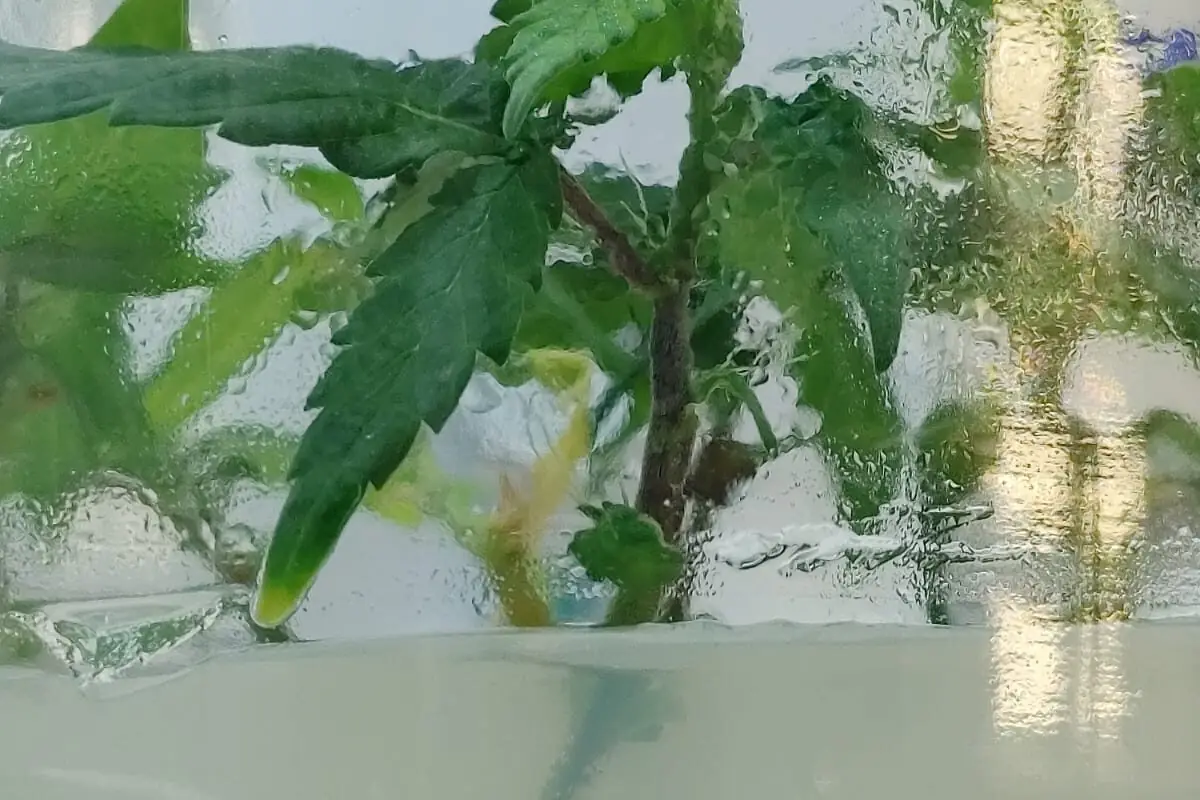
Identical plants reach the same height at the same time. Even canopies mean even light distribution, simpler training and predictable harvest windows.

Most cultivation problems don’t start in the grow room. They arrive with the plants.
Here is what “clean stock” means, how tissue culture delivers it, and how it compares with conventional cloning.
Mother plants accumulate problems: hop latent viroid (HLVd), lettuce chlorosis virus, fusarium, root aphids, spider mites. HLVd alone is now found in a large share of commercial grows and can cut yield and cannabinoid content by 30% or more, often without visible symptoms. Every cutting carries the infection forward, and every generation drifts a little further from the original plant: lower vigour, uneven canopies, unexplained losses.
Tissue culture starts again from a single clean meristem. What you gain:
Started from sterilised meristem tissue, grown in closed sterile vessels.
Genetically identical plants with the same vigour, structure and profile.
More fibrous root systems, denser branching, higher survival rates.
Planned batches on your calendar instead of waiting on mother plants.
Thousands of plants on a shelf. No mother room to maintain.
Your cultivar is banked in vitro, protected from pests, disease and crop loss.
We start each cultivar from the meristem, the microscopic growing tip that viroids and viruses reach last, and sterilise it under laboratory conditions before it ever touches a culture medium.
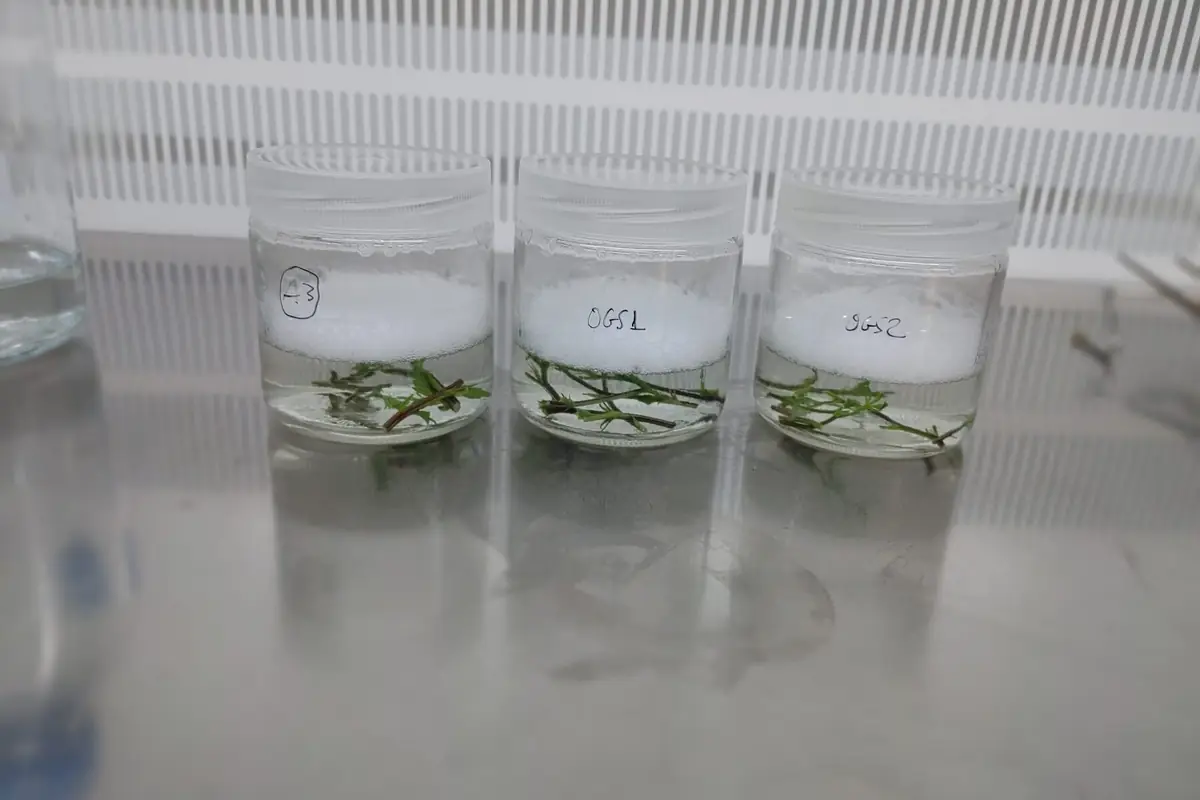
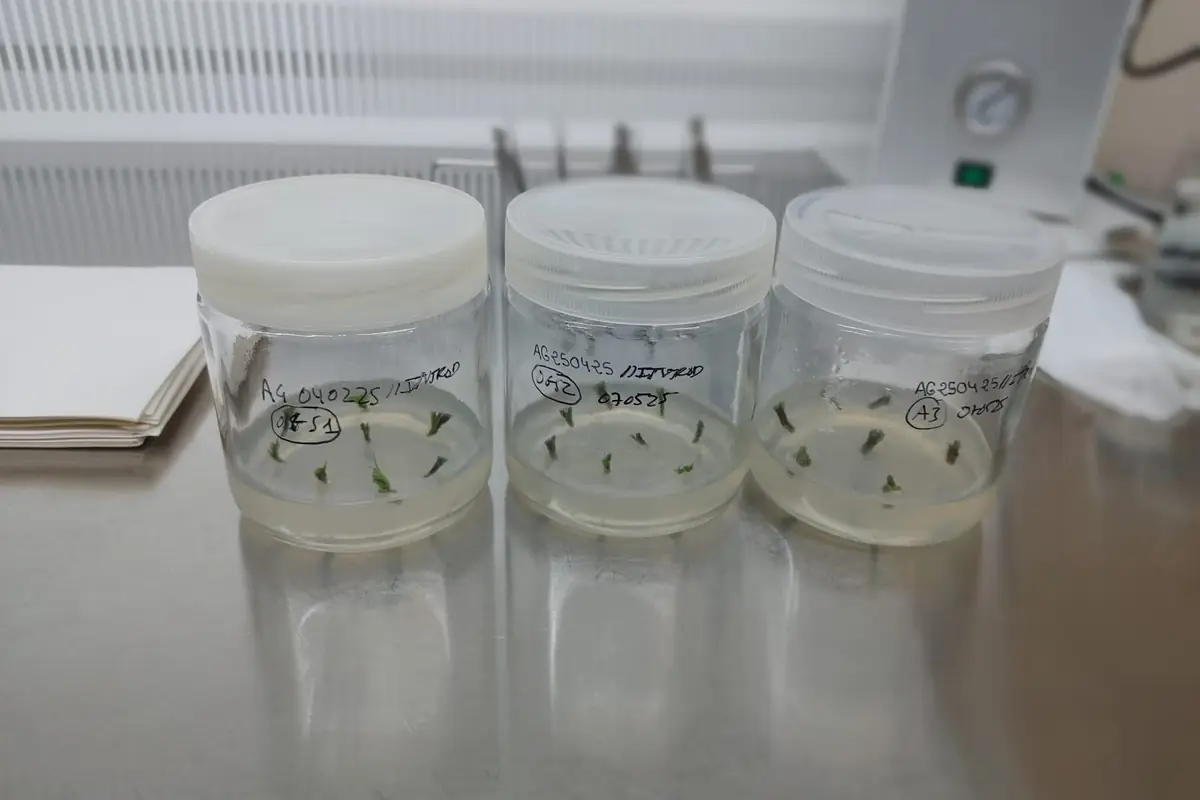
Plants grow in sealed vessels on a defined medium: no soil, no insects, no airborne spores. Each vessel and each delivery carries a batch reference, so every plant can be traced back to its source.
Material is screened for HLVd and other pathogens, with results available on request. Testing reduces and documents risk; no laboratory can guarantee a plant stays clean once it enters your facility. We tell you how to keep it that way.
Cuttings inherit whatever the mother carries. In vitro plants start clean from meristem and are tested.
Cuttings drift further every generation. In vitro resets the cultivar to the original.
Cuttings are limited by mother stock. In vitro multiplies exponentially with identical vigour.
One infected mother can end a cultivar. A banked cultivar can always be rebuilt.
Identical plants reach the same height at the same time. Even canopies mean even light distribution, simpler training and predictable harvest windows.
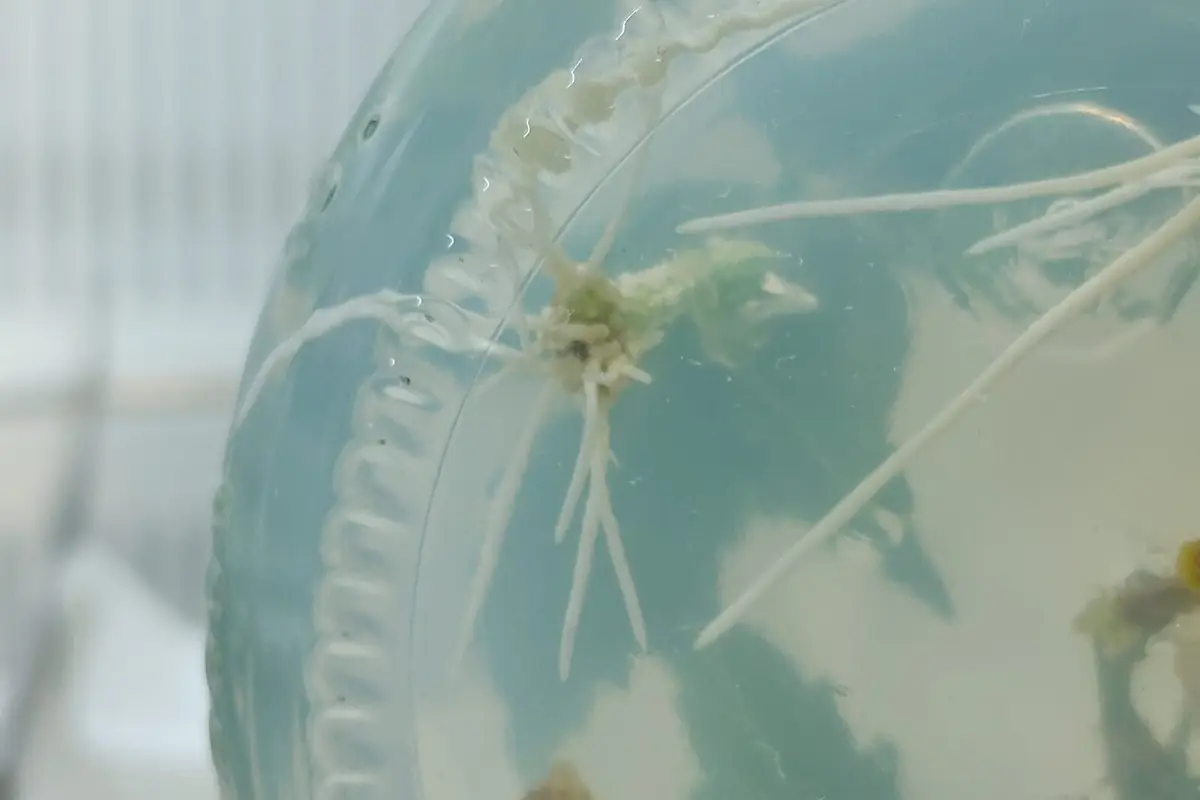
Plants produced in vitro develop more fibrous root systems and establish faster after transplant, which shows in vigour during the first weeks of vegetative growth.
Removing HLVd and other latent infections restores the cannabinoid content and yield the cultivar was selected for. Growers who switch typically see the difference in the first full cycle.
Batches are multiplied to order, so you plan your cycles around delivery dates instead of around the condition of your mother room.
Ready to compare against your current cuttings? Tell us what you grow and we will prepare a tailored offer. Plants are supplied under a supply and confidentiality agreement, which protects your investment as much as ours.